
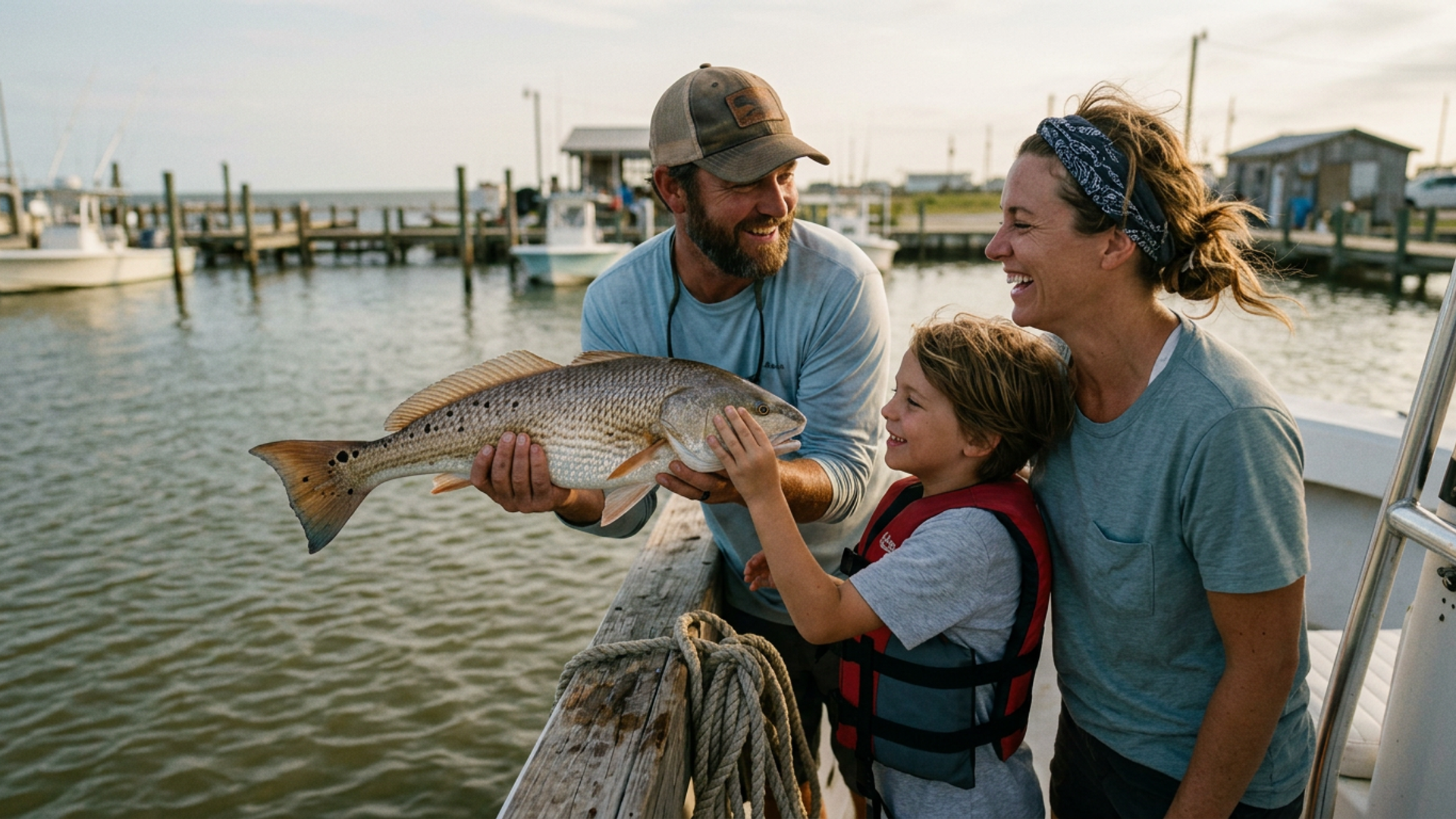
Gulf Coast fishing charters run on a simple premise: a licensed captain, a boat, and a target species. What separates a good trip from a great one is everything you sort out before you step aboard.
What to know before you book
Most captains structure trips as half-day (four to five hours) or full-day (eight hours). Half-days suit first-timers and families with kids. Full days make sense when you're chasing offshore species like red snapper or amberjack, which require the run time.
Ask the captain two questions before booking: what species are running right now, and what are the current weather cancellation terms? Any captain worth hiring answers both directly. A vague answer on species is a sign the bite is slow but they still want your deposit.
Choosing your port
The Gulf Coast covers a lot of ground. Each port has a different personality.
Port Aransas sits at the southern end of the Texas coast and punches above its size for inshore redfish and trout. The Corpus Christi Ship Channel runs alongside and funnels baitfish that draw big specks in the fall.
Galveston is a year-round inshore fishery within easy reach of Houston. Flounder run heavy in November as they migrate to deeper water. The jetties produce year-round.
Orange Beach and Gulf Shores give you easy access to the 300-foot ledge that produces red snapper and grouper from June through the federal season close. The bay system behind it runs some of the strongest inshore fishing on the northern Gulf.
Pensacola straddles the Alabama-Florida line and benefits from both state's regulations. The bay holds some of the best seatrout fishing on the coast in cooler months.
What the price actually covers
A posted day rate typically covers the captain's license and endorsements, fuel for a trip of the advertised length, tackle, bait, and a fish cleaning at the dock. It does not cover your fishing license (you buy it; some captains sell them onboard), tip (15 to 20 percent is standard for a solid trip), and ice and coolers for the ride home, which some captains provide and some don't. Ask before you book.
Offshore trips cost more because fuel is the biggest variable. A 60-mile run to the snapper grounds and back can burn 80 gallons. The price reflects it.
Booking direct vs. through a marketplace
Booking through a clearinghouse sometimes costs you more. Some platforms charge the captain a commission that the captain passes on. Others hold your money in escrow and take a cut. TideBook was built so captains set their rate, keep it, and deal directly with the angler. No middleman fees on either side.
The practical result: you can ask the captain a specific question about the trip and get a direct answer, not a customer service response routed through a platform.
What captains wish every angler knew
A few things that separate clients captains want back from those they don't:
- Show up five minutes early. Captains schedule tight windows around tides, and a late start in the morning means a rushed end.
- Dress for the actual weather, not the forecast. It is always cooler on the water than on land, often dramatically so in spring and fall.
- Bring exactly what the captain recommends. No extra rods. No personal coolers unless asked. The deck is a workspace, not a picnic area.
- Let the captain run the fish. An angler who argues with the captain's net timing loses fish. Trust the person who's done it a thousand times.
Frequently asked questions
Do I need a fishing license for a charter? In most Gulf states, the captain's for-hire license covers the entire party, so you do not need a separate recreational license. Confirm this when you book, because state rules differ slightly.
What happens if the weather is bad? Most captains follow the same rule: if they cancel for weather, you get a full refund or reschedule at no charge. If you cancel for weather and the captain intended to run, you may forfeit the deposit. Read the cancellation terms before you pay anything.
Can I keep the fish? Yes, within the legal limits for that species and the current season. The captain knows the rules and will tell you what you can keep. Offshore species like red snapper have specific federal seasons; the captain tracks the open dates.
How far in advance should I book? For weekends in peak season (summer offshore, fall inshore), three to four weeks is reasonable. Weekdays are almost always more available. Last-minute trips do open up when someone cancels.